
The Price Must Include the Tax
A number that is not the number they will pay is not a price. In Europe it is also not legal theatre.

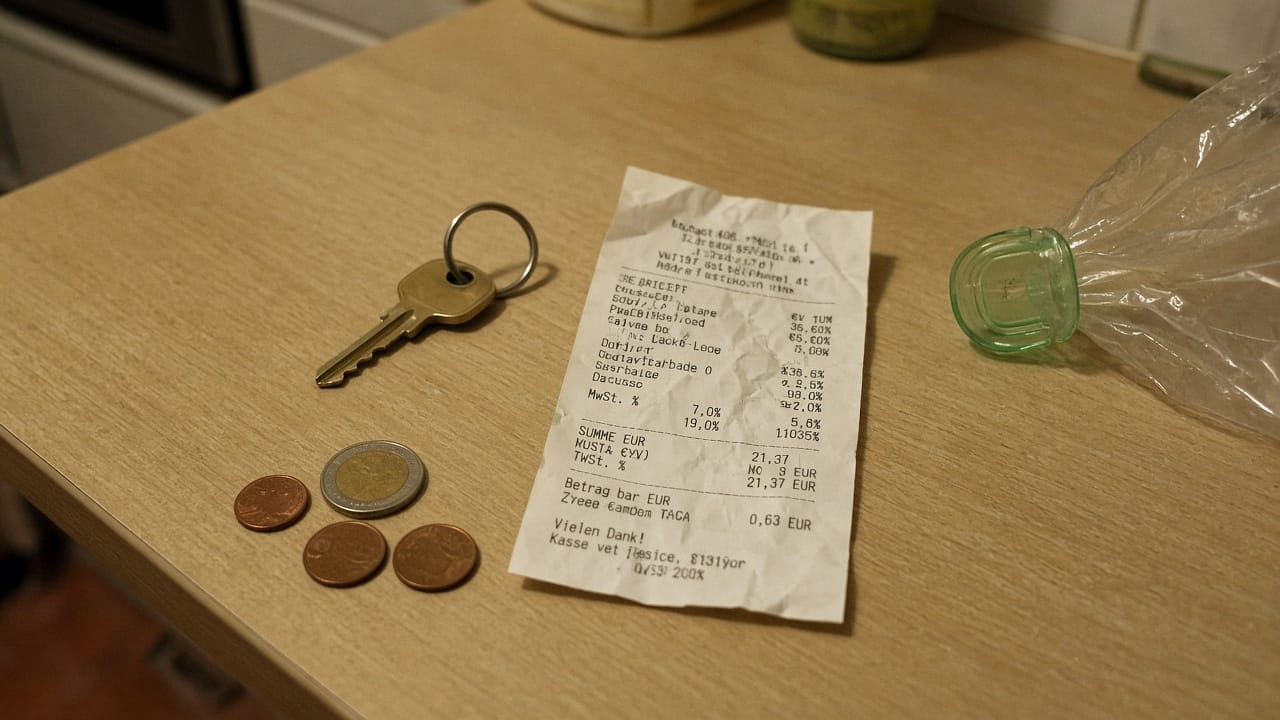
A number that is not the number they will pay is not a price.
In Europe it is also not legal theatre.
It is a sentence you already agreed to write.
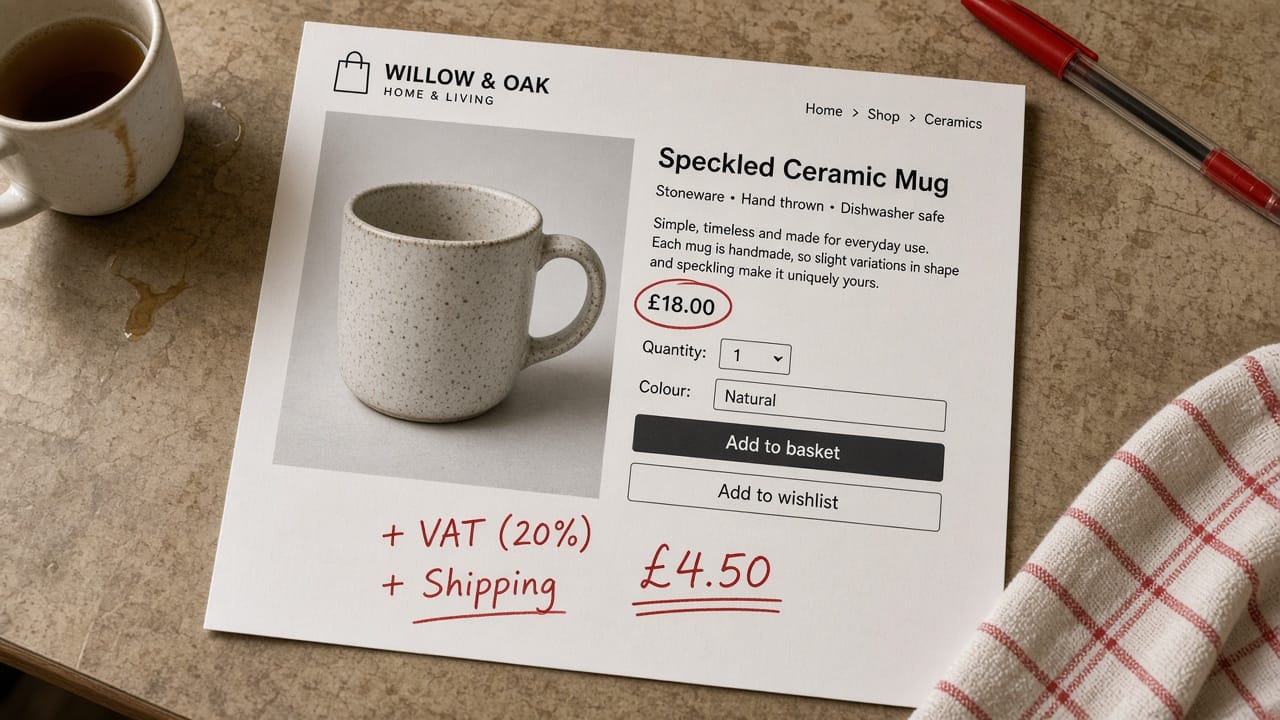
The most expensive line on a product page is the one that looks cheap.
€48 until the cart.
Then VAT.
Then shipping.
Then a "handling" fee that was hiding in a tooltip.
The customer did not discover a bargain.
They discovered that the first number was incomplete.
Baymard records 40% of remaining abandonments as extra costs too high — shipping, tax, fees.
Another 12% could not see the total before they started checkout.
Those are not mystery shoppers.
Those are people who were shown a fiction and then a bill.
What the law already asked for
This is not a UX trend.
Directive 98/6/EC requires the selling price — and usually the unit price — to be indicated unambiguously.
The selling price is the final price.
It includes VAT and other taxes.
Directive (EU) 2019/2161 — the Omnibus / "better enforcement" directive — added a rule brands still treat as a sale-banner trick: if you announce a reduction, you must state the prior price, and that prior price is the lowest price you applied in a period of at least 30 days before the reduction.
Your Europe says it in one line: the quote must include taxes and delivery if they are part of what will be paid; if extras cannot be calculated yet, you say so up front.
Germany already lived this as the Preisangabenverordnung: the price a consumer sees is the price including Umsatzsteuer.
A fashion site that still writes "ex VAT" on a B2C page is not being international.
It is being wrong.
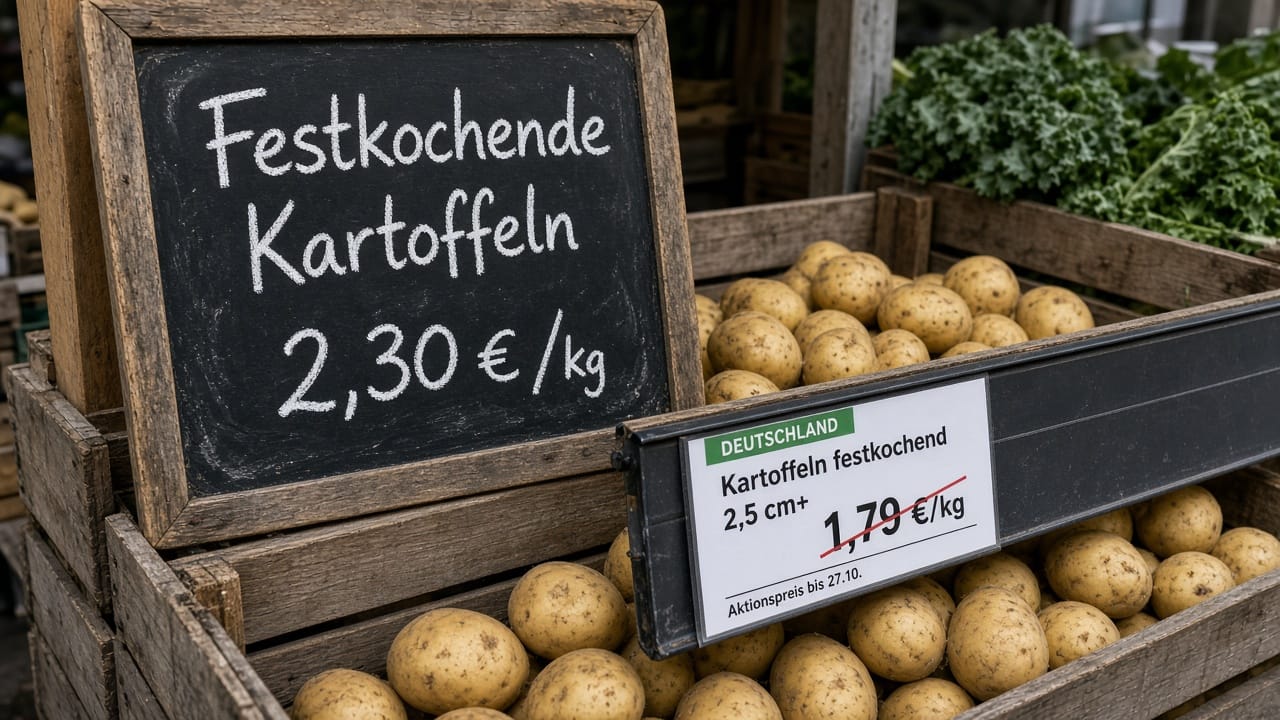
A strikethrough is a claim
"Was €120, now €60" is a history.
If the €120 was a flag you planted for a week so the 50% would look true, the strikethrough is a costume.
The Omnibus rule exists because that costume became an industry.
A honest reduction names the lowest recent price, not the highest decorative one.
A honest page names shipping before the card field — or says "shipping calculated on the next screen" in the same type as the price, not in a footnote the colour of the background.
We already wrote that translation is not localization.
A converted dollar with no tax line is the same error in a different costume.
How we think about it at BuonaLabs
We treat the price as a specification, like a shade or a dimension.
The number on the PDP is the number on the invoice, or the page explains the gap in the same breath.
Sale badges have a 30-day memory.
B2B ex-VAT is a mode, not a default that leaks onto a consumer URL.
The price must include the tax.
If it doesn't, it isn't a price.
It is an opening bid.
Sources
https://baymard.com/lists/cart-abandonment-rate
https://eur-lex.europa.eu/eli/dir/1998/6/oj
https://eur-lex.europa.eu/eli/dir/2019/2161/oj
https://europa.eu/youreurope/citizens/consumers/unfair-treatment/unfair-pricing/index_en.htm
BuonaLabs is a digital innovation studio in Lübeck, Germany, building product pages, digital twins, and commerce experiences that try to tell the truth about the object. If this is the work you are trying to do, let's talk.